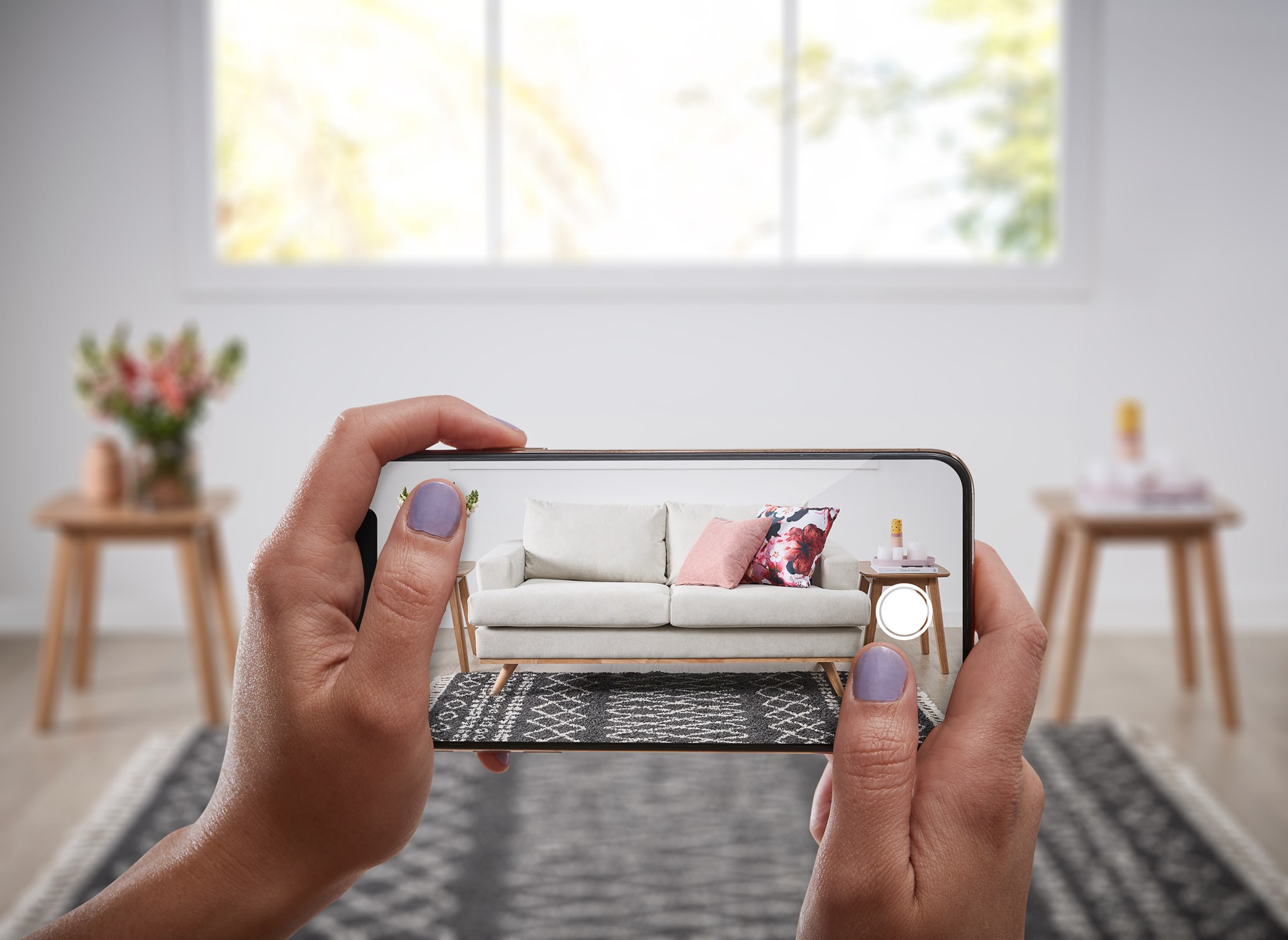
In a sector that is more competitive than ever, 3D furniture product visualization has risen to prominence for brands looking to gain a market advantage. And with good reason: not many investments can boast of driving a 22-fold return on investment (ROI), by boosting sales, reducing returns, and enhancing the customer experience. But that’s exactly what UK furniture giant DFS achieved when it implemented visualization experiences – powered by 3D and augmented reality (AR) – across more than 10,000 of its products.
3D product visualization has transformed the way consumers interact with furniture when shopping. For many, it has now become a capability they expect as standard: Deloitte research finds 76% of people want to use visualization tools in their everyday lives. By enabling customers to explore furniture pieces in lifelike 3D, from every angle, and even see them in their own homes with AR, furniture product visualization provides retailers a powerful way to tackle purchase hesitation and boost customer confidence – and is a core component of AR in furniture ecommerce strategies.
“We find that AR usage in online settings dramatically affects customer engagement, customer behavior, and sales.”
– Harvard Business Review
How can furniture brands leverage these powerful tools? Industry data and case studies show how 3D and AR product visualization boosts key metrics including conversion rates, product interaction, and customer engagement, delivering benefits right across the spectrum and – crucially – a significant return on investment.
Discover how 3D furniture product visualization can drive sales and profitability. Contact Enhance XR for a free consultation today.
What is 3D furniture product visualization?
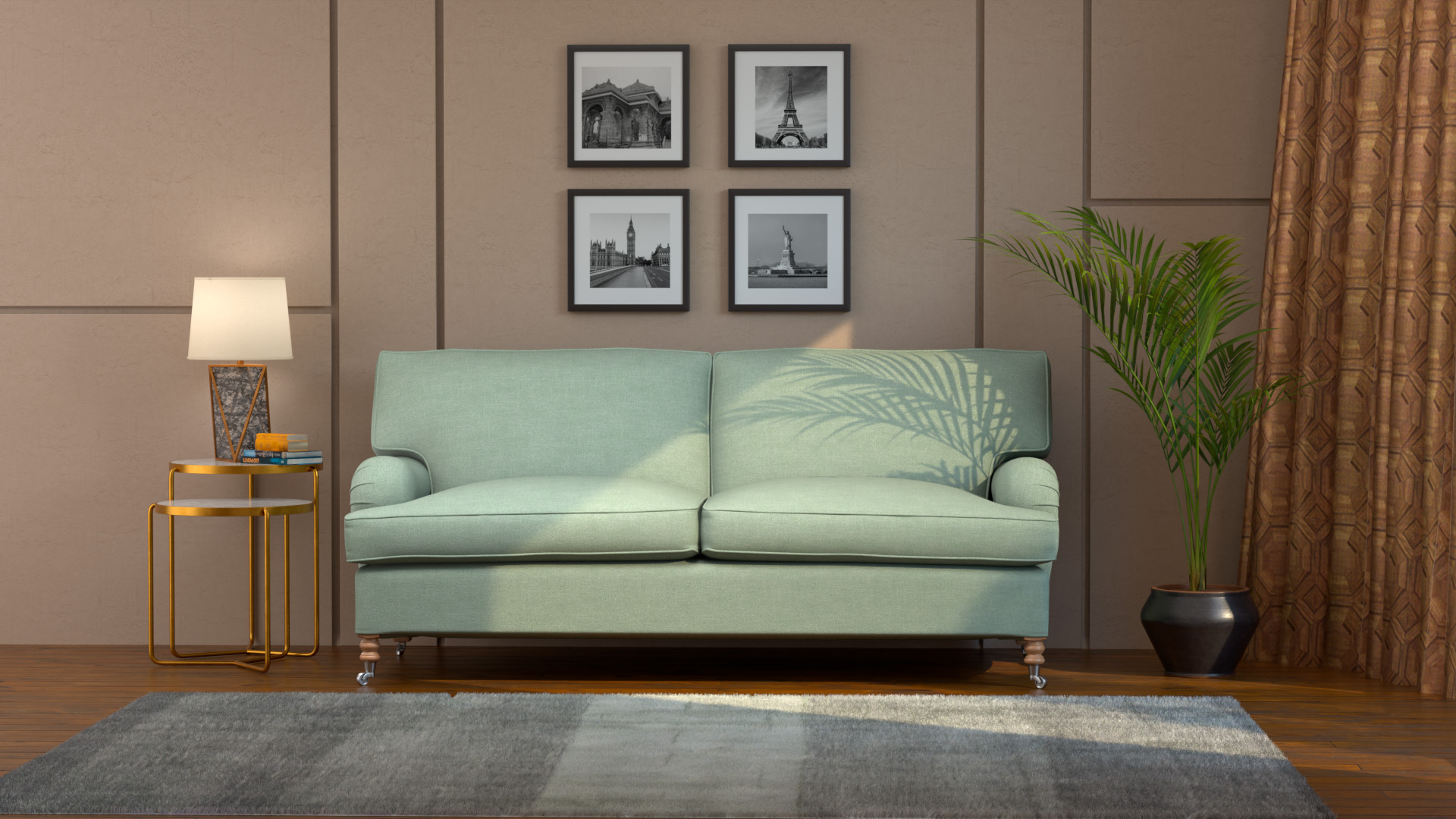
3D furniture product visualization is the use of interactive, photorealistic 3D models that allow customers to view, rotate, and customize products directly on product pages. It replaces static images with real-time, immersive product experiences – helping shoppers understand scale, materials, and configuration options. For retailers, it improves engagement, reduces product returns, and increases ROI by making the online buying process more confident and informed.
For consumers, immersive experiences combine the best elements of shopping in a retail store with live product customization and try-before-you-buy experiences, broadening the scope of what’s possible when it comes to customer journeys. Market figures show accelerating 3D and AR adoption in furniture retail, but only 58% of leading brands have fully integrated the technology – despite 96% confirming 3D and AR tools have increased sales.
Given the gap between consumer demand and the proportion of brands offering enhanced product visualization experiences, there is clear headroom for furniture businesses to gain a competitive advantage.
How 3D product visualization has revolutionized furniture retail
The adoption of 3D and AR product visualization tools isn't just a step towards technological advancement for forward-thinking brands. It's a strategic move that reaps significant returns. Here's an overview of the benefits reported by companies who have integrated the technology in their operations.
- Elevating customer engagement: Immersive product visualization transforms the online shopping experience from a simple screen interaction to a dynamic, engaging journey. Customers can explore products in lifelike detail in 3D and AR, while the technology also enables real-time product configuration, empowering buyers to personalize items to their preferences. The result is a more-involved and longer-lasting engagement with potential purchases. This interactive element not only makes shopping enjoyable but also memorable, encouraging customers to revisit their favorite online stores.
- Fostering customer confidence and reducing returns: One of the most significant impacts of 3D and AR product visualization is its ability to let customers 'try before they buy.' By enabling them to visualize furniture products in their own spaces, customers gain a clearer understanding of what they're purchasing, leading to more confident decisions and higher satisfaction. Surveys show that 80% of buyers feel more confident in purchases when able to trial products in 3D and AR first. This clarity not only enhances the customer experience but also leads to a further benefit for businesses: a reduction in product returns. With better-informed purchasing decisions, the costly issue of handling returns diminishes.
- Boosting conversion rates: The journey from browsing to buying is often fraught with hesitation and second thoughts, particularly with high value, considered purchases such as furniture. 3D product visualization effectively addresses these issues by providing customers with a realistic preview, boosting the chance of converting interest into sales.
- Securing a competitive advantage: In an ever more competitive furniture sector, differentiation is key. Immersive product visualization offers an innovative and effective way for brands to stand out from the crowd. By adopting technologies such as 3D and AR, businesses position themselves as forward-thinking and customer-centric, appealing to tech-savvy consumers. Moreover, the effectiveness of 3D and AR product visualization in enhancing the shopping experience attracts new customers and plays a crucial role in retaining them. According to data from Google, more than 98% of shoppers who have used AR find it helpful.
Real-world success: DFS achieves 22x ROI with 3D furniture visualization
A high-profile example of 3D furniture product visualization success comes from DFS, the UK’s leading sofa retailer. By rolling out a platform that offered immersive visualizations of more than 10,000 products, DFS saw an impressive 112% increasein conversion rates among shoppers who used the tool.
“The results so far have been outstanding, and we are successfully growing online sales.”
– James Vernon, Head of Online, DFS
In addition, the firm saw a 106% jump in revenue per visit among shoppers who used enhanced product visualization as part of their customer journey, generating four times the monthly revenue from 3D and AR-enabled products than forecast. The overall result was a 22-fold ROI—clear evidence of an investment capable of paying for itself many times over.
The DFS case study also reinforces a key point: when customers feel confident in what they’re buying—because they’ve virtually ‘seen’ it in their space—they’re more inclined to complete purchases and less likely to return items later.
5 key benefits of 3D furniture product visualization
Retailers using 3D furniture product visualization report stronger results across the customer journey. Benefits include:
- Higher engagement and buyer confidence – Interactive 3D tools let customers explore products in greater clarity, leading to deeper engagement and more confident purchases.
- Increased conversion rates – Visualization reduces hesitation and guesswork, boosting sales. Home Depot saw conversion rates rise 200% with 3D and AR tools, in line with results seen by brands including DFS and IKEA.
- Enhanced customer experience – Real-time customization makes shopping more intuitive, enjoyable, and tailored, triggering furniture’s shift to 3D product personalization.
- Fewer returns and lower costs – By previewing items in 3D and AR, shoppers make better-informed decisions, leading to significantly fewer returns. Shopify reports return rates decreased by 40% for merchants using immersive tools.
- Stronger sales performance – Visualization tools increase purchase likelihood, with 82% of furniture leaders identifying a strong ROI from the technology.
Practical steps for adopting 3D furniture product visualization
1. Select the right products
Focus on pieces that benefit most from detailed previews, like large sofas, customizable dining tables, or modular shelving. High-value items with variable configurations often see the biggest conversion gains.
2. Develop accurate 3D models
Whether you build 3D furniture models in-house or partner with a specialist, high-quality assets are crucial. That means realistic textures, true-to-scale proportions, and visuals optimized for immersive tools. Any inconsistency between virtual representation and the real product can quickly undermine customer trust.
3. Streamline the user experience
Avoid burying 3D and AR visualization features behind too many clicks. Prominent “View in Your Room” buttons or “Customize This Item” prompts can guide new users. Web-based previews often lower the adoption barrier compared to app-only solutions.
4. Show the impact
Don’t just roll out the feature—promote it. Share stats about how 3D furniture product visualization saves customers time and money by reducing the guesswork around color matching or sizing. When people grasp the personal benefit, they’re more inclined to try it.
5. Collect and leverage user feedback
Every interaction with visualization tools provides insights. Which items do customers spend the most time customizing? Which colors or configurations get the highest engagement? Use this data to refine your offerings, forecast inventory needs, and continually improve the overall shopping journey.
Beyond the sale: Long-term rewards
Aside from immediate gains, 3D furniture product visualization helps brands enhance the buyer journey in ecommerce. Satisfied customers often share their positive experiences on social media – generating organic buzz that draws new shoppers. You can also gather valuable analytics from these interactions to see which products drive the most engagement or which styles resonate best with certain demographics.
Over time, these insights help you optimize your merchandising strategy, refine marketing messages, and even guide product development. By continually iterating on visualization features and user feedback, your online platforms remain aligned with evolving consumer preferences and help to future-proof your furniture brand.
Why 3D and AR visualization is key to driving ROI
3D and AR furniture product visualization represents a major leap in how shoppers interact with—and ultimately purchase—large, high-value items. From increased engagement and reduced returns to a measurable boost in sales, the data speaks for itself. Brands like DFS have already demonstrated how a proactive approach to immersive visualization can translate into tangible revenue gains.
By delivering an online experience that’s not just informative but also interactive, you build credibility and increase the likelihood of a hassle-free purchase. In doing so, you’ll be well-prepared to thrive in a marketplace that increasingly demands “real-world” experiences – even when shopping online.